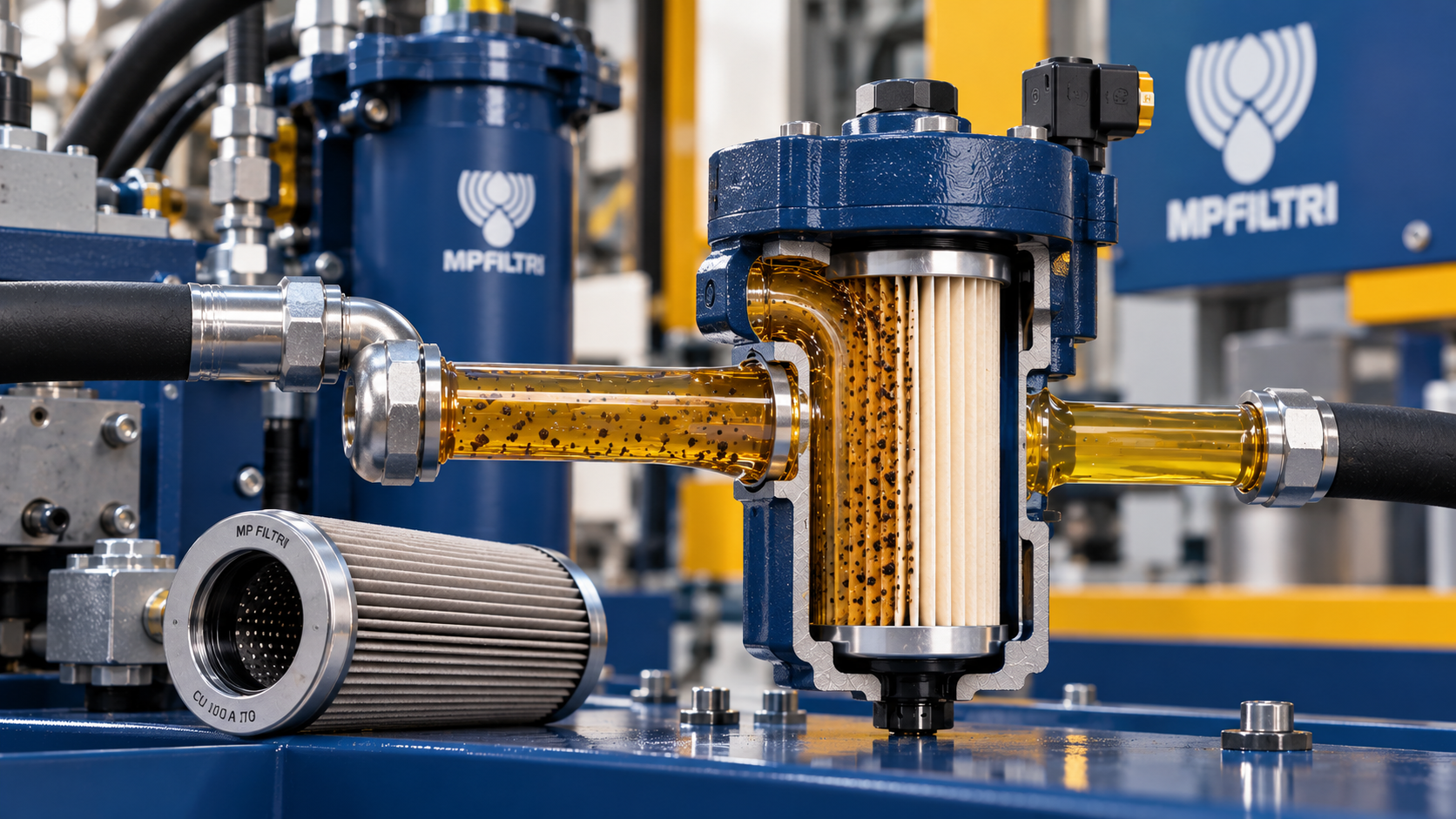


How Does Hydraulic Filtration Work?
Hydraulic filtration is essential for the proper operation and reliability of hydraulic systems. In a hydraulic circuit, the fluid – in most cases oil – transfers energy and motion and must maintain suitable characteristics to ensure consistent performance over time.
The presence of contaminants in the fluid can affect component operation, increasing wear and reducing system efficiency. Hydraulic fluid filtration therefore aims to reduce the presence of particles and other impurities, helping to maintain the level of cleanliness required by the system.
But how does a hydraulic filtration system work? What are the main types of contaminants, and where are hydraulic filters installed within the circuit?
What is hydraulic filtration?
Hydraulic filtration is a process in which contaminants present in the hydraulic fluid are retained by filter elements, keeping the fluid at a level of cleanliness compatible with the requirements of the system.
In a hydraulic system, the fluid – in most cases oil – acts as the medium through which energy is transferred. Its quality and level of contamination can therefore directly affect component performance and the overall reliability of the circuit.
The choice of filter depends on the characteristics of the circuit, the type of fluid used and the operating conditions. The position of the filter within the system is also important to ensure component protection and the required level of fluid cleanliness.
Why is hydraulic filtration important?
Even very small particles can cause problems in hydraulic systems. Proper filtration helps maintain fluid cleanliness and protect components from wear.
A correctly designed filtration system helps to:
- limit the presence of contaminants in the fluid;
- protect circuit components;
- reduce wear;
- maintain system performance;
- help extend component service life;
- reduce the risk of failures and machine downtime.
The filtration system should therefore be considered an integral part of hydraulic system design and management.
What are the main contaminants in hydraulic oil?
Contaminants that may be present in hydraulic fluid can have different characteristics and origins.
The main categories include:
Solid contaminants
These mainly consist of particles that can enter the circuit from outside or be generated during system operation.
Their presence can contribute to component wear and affect the correct operation of the system
Water
The presence of water in the fluid can affect the properties of the oil and the proper operation of components. Contamination control must therefore also take water into account, in addition to solid particles.
Air
The presence of air in the fluid can affect system behaviour and must be considered when managing hydraulic fluid.
Chemical contaminants
Certain chemical contaminants can also affect fluid quality and system performance.
Contamination control therefore requires consideration of the different types of contaminants and the specific characteristics of the application. Contamination monitoring makes it possible to assess contamination levels over time and manage the system more effectively, starting with the filters being used
Where are hydraulic filters installed?
The position of the filter within the circuit is one of the key factors determining its filtration function.
The main configurations include:
Suction filters
Suction filters are installed on the suction line, upstream of the pump, and are mainly used to protect the pump from contaminants present in the oil reservoir.
To avoid excessive pressure losses in the suction line, they are normally used with a coarser filtration rating than other configurations
Return filters
Return filters are installed on the return line to the oil reservoir and retain impurities generated during system operation before the oil flows back into the tank. This helps keep the fluid in the reservoir cleaner
In-line and pressure filters
In-line and pressure filters are installed on pressurised lines running from the pump to the hydraulic components and are used to protect circuit components from particles that may be present in the fluid.
The choice of solution depends on operating pressure, flow rate and the filtration level required by the application
Combined return/suction filters
Some solutions combine suction and return filtration functions in a single body, with two separate lines. This configuration can help simplify the system and reduce overall dimensions.
Spin-On filters
Spin-On filters consist of a screw-on cartridge and, depending on the configuration, can be used on the return line or in auxiliary medium- or low-pressure circuits.
Filtration, component protection and reliability
Filtration should be considered as part of a broader approach to protecting the hydraulic system.
Contaminated fluid can accelerate component wear and contribute to a loss of system efficiency. Conversely, proper oil cleanliness management and the selection of a suitable filtration system can help extend machine service life and reduce downtime.
Filter selection cannot therefore be based solely on the filtration rating. The characteristics of the fluid, pressure, flow rate, temperature, contamination level and operating conditions of the application must also be considered.
Learn More About Hydraulic Filtration
For further information, visit the MP Filtri Knowledge Center, where you can find technical content covering hydraulic filtration, filter elements, contamination and fluid monitoring.